The Mark of the Beast: What It Really Meant in the First Century
Stevie DxYz
11/4/20253 min read
Understanding Revelation’s Most Misinterpreted Prophecy
Opening Statement
For generations, preachers have warned about chips under the skin, barcodes on groceries, and credit cards that might secretly bear the number 666. Yet when Revelation 13 was written, the “mark of the beast” already existed. John was not predicting a technology. He was exposing a system, a Roman one, where loyalty to the emperor determined who could buy or sell.
Exhibit A: The Context of Revelation 13
Revelation was written to first-century believers trapped in an empire that worshiped its rulers. “No one could buy or sell unless he had the mark” (Revelation 13:17) describes an economy bound to emperor worship. Refusing that allegiance was not just impolite; it was treason.
The mark identified who belonged to Caesar’s world order. Without it, you were shut out of trade guilds, markets, and even daily survival. Christians who confessed “Jesus is Lord” instead of “Caesar is Lord” paid the price in blood and poverty.
Exhibit B: The Nature of the Mark
Rome loved its symbols of ownership. Slaves were branded on the hand or forehead with their master’s seal. Soldiers carried tattoos of allegiance to their commanders. Citizens carried coins stamped with the emperor’s name and image.
That is what John’s readers saw every day. The Greek word for mark, charagma, means an engraved stamp or impression, the same term used for images on coins and for brands on slaves. The “mark” was not a microchip; it was the everyday imprint of imperial loyalty.
Exhibit C: The Number of the Beast
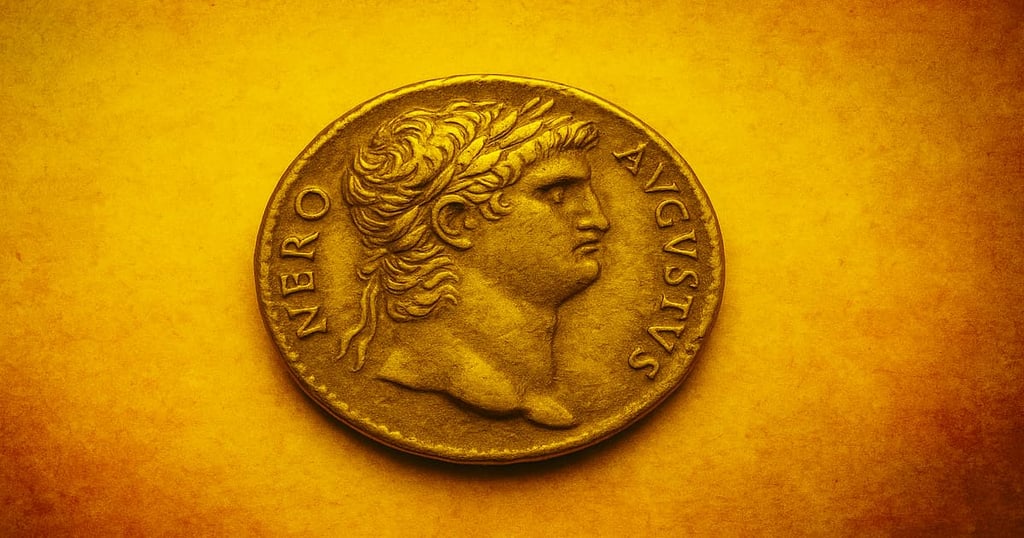
John calls the beast’s number “the number of a man,” 666 (Revelation 13:18). In Hebrew gematria, “Neron Kaisar,” the formal title of Emperor Nero, adds exactly to 666. Coins from his reign bore his image and Latin title: Nero Caesar Augustus. Every purchase, every transaction, every coin in your hand was a silent confession of worship, his name in your palm, his image before your eyes.
As Josephus records, Nero’s persecutions and the ensuing Jewish War (AD 66–70) set the stage for Jerusalem’s fall. The mark and the beast were not future fears; they were present realities.
Exhibit D: The Mark on Hand and Forehead
Long before Rome, God used the same imagery to describe covenant loyalty. Israel was told, “Bind these words as a sign on your hand and between your eyes” (Deuteronomy 6:8). It meant total devotion, actions and thoughts marked by God’s law.
John flips the image. Those loyal to the beast bear his counterfeit covenant. The mark on hand and forehead was not about location; it was about allegiance. Either your deeds and thoughts served the Lamb, or they served the empire.
Exhibit E: The Economic Control
Archaeology and Roman law confirm that participation in trade often required a sacrifice to the emperor. Market certificates, known as libelli, proved that you had offered incense to Caesar. Without that proof, you could not legally buy or sell. Revelation’s language mirrors that exact system.
The beast’s mark was an economic signature of idolatry. To bear it was to accept Rome’s rule over conscience. To reject it was to suffer, but to gain the Kingdom.
Exhibit F: Fulfillment in AD 70
When Jerusalem fell in AD 70, the world of the old covenant collapsed with it. Nero’s empire, symbolized by the beast, was judged, and the Lamb’s mark replaced the beast’s. Believers bore a new seal, the Holy Spirit (Ephesians 1:13), proof of belonging to Christ, not Caesar.
The “mark of the beast” was not a future horror. It was fulfilled in the empire that crucified the Lord and persecuted His church. Revelation’s prophecy closed with Rome’s own flames and Jerusalem’s destruction.
Verdict: The Evidence Has Spoken
Every witness, Scripture, history, and logic testifies to the same truth.
The mark was not a chip, not a barcode, not an invention waiting in some lab. It was the branding of allegiance in the first-century world where Caesar demanded worship.
To keep preaching a future mark is to ignore the evidence already entered into record. The prophecy is closed. The judgment was rendered. And the only mark that matters now is the one Christ places on His own.
Case closed.